"The ultimate active lifestyle addition to the Back Bay." That's how Meg Mainzer-Cohen, the executive director of the Back Bay Association, described Swingers when the crazy-golf and cocktail venue opened at 777 Boylston Street in February. It's an odd way to talk about a mini-golf course, until you notice what she isn't describing. She isn't describing a new building. She isn't describing a new block. She's describing 21,000 square feet of golf, arcade, and bar space that didn't exist in the neighborhood a year ago, built entirely inside a storefront that used to hold a single retail tenant.
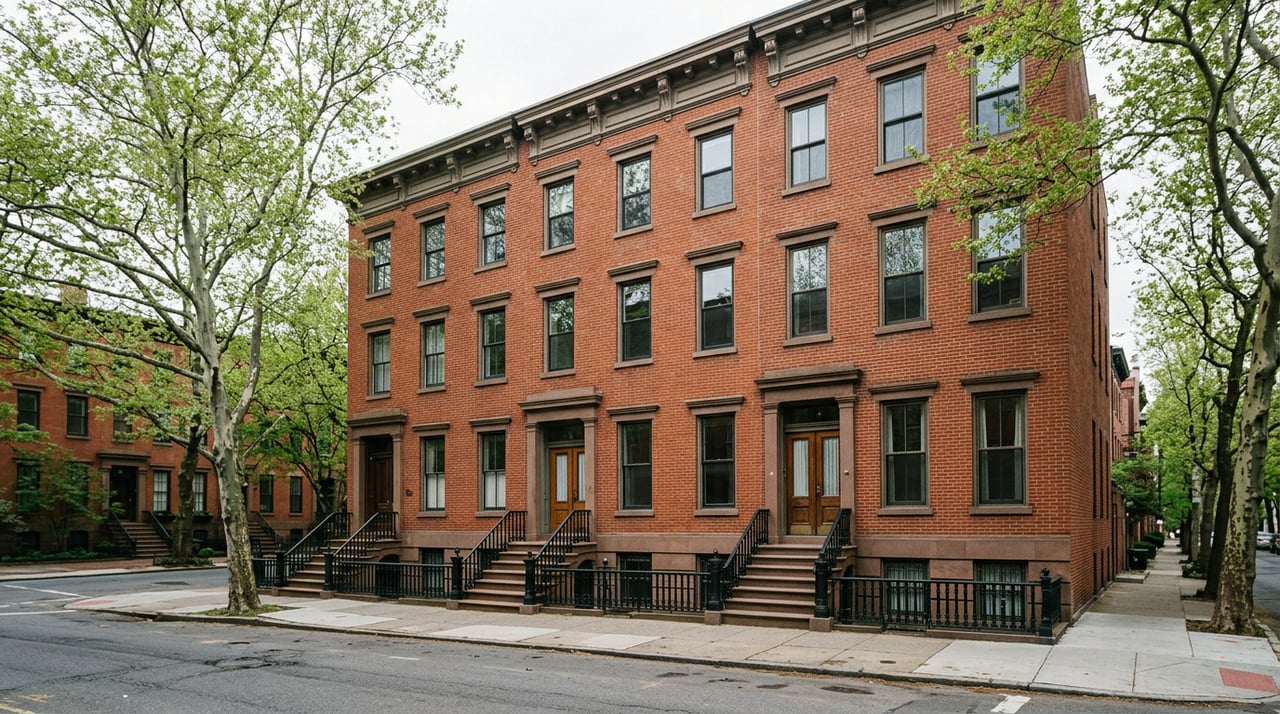
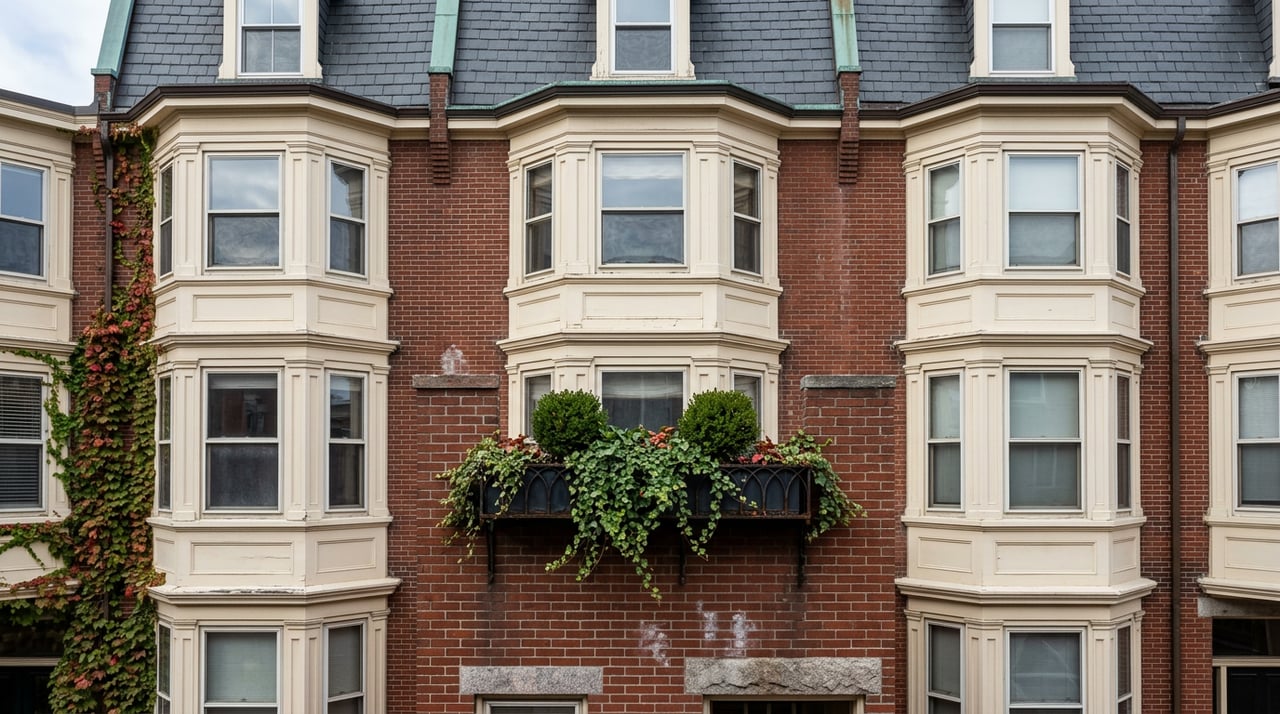
That's the pattern worth naming here. If you live in Back Bay, you've probably noticed that this has been an unusually active year for the neighborhood without anything looking obviously different from the sidewalk. The brownstone facades are the same. The lot lines haven't moved. Newbury Street is still eight blocks long. What's changed is how much is happening inside the buildings you already walk past, and it's worth understanding why, because it tells you something about how much confidence money is putting into a corridor that can't physically expand.
Two restaurants, one address, zero new ground broken
Start at 400 Newbury Street, inside the Lyrik development at the corner of Newbury and Mass Ave. This spring, two restaurants opened there at the same time. Rosa y Marigold is a 100-seat Peruvian restaurant with an open kitchen, from the team behind Somerville's Celeste and Cambridge's La Royal. Co-owner Maria Rondeau described the experience to the Boston Globe as one where "you step inside and you're a participant in something, you're not just a viewer." A few floors of the same building hold Avra Estiatorio, a 250-seat Greek seafood restaurant with floor-to-ceiling windows, three private dining rooms, and a raw bar.
Two restaurants, one street address. That's 350 seats of new dining capacity added to Back Bay without a single new lot, without a widened storefront, without the city touching the sidewalk. The neighborhood's building stock was platted in the nineteenth century on narrow, fixed lots. There's no room to bump out a facade on Newbury the way a suburban shopping center adds a wing. What landlords and operators are doing instead is filling the vertical space they already control, floor by floor.
The golf course that ate a whole retail floor
Swingers followed the same logic a few blocks away. The London-born "competitive socializing" brand opened its first New England location at 777 Boylston on February 27, spanning more than 21,000 square feet across two levels. It replaced what had been a single ground-floor retail space. Rather than gut the shell, the operators kept the exposed brick and timber beams already there and built two nine-hole crazy-golf courses, several cocktail bars, and a Belle Époque-style arcade called Carnival into the existing envelope.
The Boston location came in through a partnership with Tavistock Restaurant Collection, the group behind two long-running Back Bay steakhouse and seafood restaurants, and Brooklyn-born Emmy Squared Pizza signed on as the food partner. None of that required Boylston Street to get any wider. It required someone to look at an underused footprint and ask how many uses could stack inside it.
Here's the comparison that makes the pattern visible:
| Address | Previous footprint | What's there in 2026 |
|---|---|---|
| 400 Newbury St (Lyrik) | Single-level retail space | Two restaurants, 350 combined seats, across multiple floors |
| 777 Boylston St | Single-level retail storefront | Two crazy-golf courses, multiple bars, and a retro arcade across two levels |
A headline that reads "three new venues open in Back Bay" undersells what's actually happening if two of them are stacked inside buildings that were already standing. The neighborhood's footprint stayed exactly the same size. Its capacity for restaurants, drinks, and things to do on a Tuesday night did not.
The park did the same trick without adding an inch of land
Copley Square Park just ran the identical playbook on public land. The city finished a $18.9 million, three-year renovation designed by Sasaki, and Mayor Michelle Wu cut the ribbon on May 27 during the annual Back Bay and Beacon Hill Neighborhood Coffee Hour. The park is still 2.4 acres, the same footprint it's held for decades. What changed is what that footprint can hold.
The redesign added a diagonal footpath that retraces the long-closed stretch of Huntington Avenue, cutting from the corner of Boylston and Clarendon to Dartmouth and Huntington. It added a raised grove of shaded seating built to handle the truck loads and staging that First Night and the Boston Marathon require. It doubled the tree canopy with 46 new trees, brought species diversity up from four to nine, and restored the fountain with upgraded mechanical systems. The lawn area was cut roughly in half, down to about 10,000 square feet, traded for hard paving that can host markets, performances, and events without turning to mud.
That trade produced some real friction. A Boston Globe editorial called the reworked square "an event space" more than a park, and noted that a 2.4-acre plaza with no cafe seating and nowhere to buy a coffee still leaves a lot of downtime for a space in one of the city's busiest neighborhoods. Fair criticism. But the square is already booked. The Copley Square Farmers Market runs two days a week through Thanksgiving week. The Boston Book Festival returns to Copley Square on October 17 for its eighteenth year, with more than 200 authors and an outdoor fair of 60-plus exhibitors, sharing the weekend with Head of the Charles. Same 2.4 acres. More programming than the old lawn-and-fountain layout could reasonably schedule.
What's actually on your calendar between now and Halloween
If you're weighing whether any of this changes how you spend a free evening, here's what's confirmed for the next two months:
- Open Newbury Street, the car-free Sunday closure from Berkeley Street to Massachusetts Avenue, has four dates left on the 2026 calendar: September 6, September 13, September 20, and one date in October.
- BPL's Concerts in the Courtyard, held in the Italianate courtyard of the McKim Building at 700 Boylston, runs Friday afternoons at 12:30 p.m. through the end of August under this year's "Revolutionary Ideas" theme, with the library's cafe open for the lunchtime sets.
- The Boston Book Festival takes over the newly reopened Copley Square on October 17, free and open to the public, following a ticketed opening night on October 16 featuring Michael Lewis in conversation with Geraldine Brooks at Old South Church.
Stack those against Rosa y Marigold's live-music nights and Swingers' group packages at 777 Boylston, and you get a programming calendar denser than what Back Bay has carried in past summers, built almost entirely on ground the neighborhood already owned or occupied.
Why this matters if you already live here
The easy read is "Back Bay got more restaurants and a nicer park." The more useful read is what it says about the neighborhood's ceiling. Back Bay can't sprawl. Its rowhouse blocks were locked in place a century and a half ago, and that scale is precisely what keeps Newbury from looking like every other retail corridor in the country. What this year shows is that the neighborhood still has room to grow, just not outward. It grows by convincing landlords, operators, and the city to build more into the same square footage they already had. That's a different kind of confidence than a developer buying up empty lots. It says the corridor's existing real estate is valuable enough to justify a second and third use for every floor.
For anyone who owns here or is watching the neighborhood from the outside, that's worth filing away. A neighborhood that can only get denser, not wider, tends to reward the buildings that were built with height and depth to spare. The Lyrik development had the floors to hold two full restaurants. The 777 Boylston storefront had the ceiling height and structural bones to take on a second level. Not every Back Bay building does.
If you're curious what that means for a specific address on Back Bay's Newbury Street, Marlborough Street, or Commonwealth Avenue, that's a conversation worth having with someone who tracks this stretch of the city closely. David Mackie has spent his career inside these blocks, and his team can walk you through what a building's bones are actually worth in a neighborhood that keeps finding new ways to use the space it already has. Reach out to receive exclusive off-market listings as they come up in Back Bay and the surrounding neighborhoods.