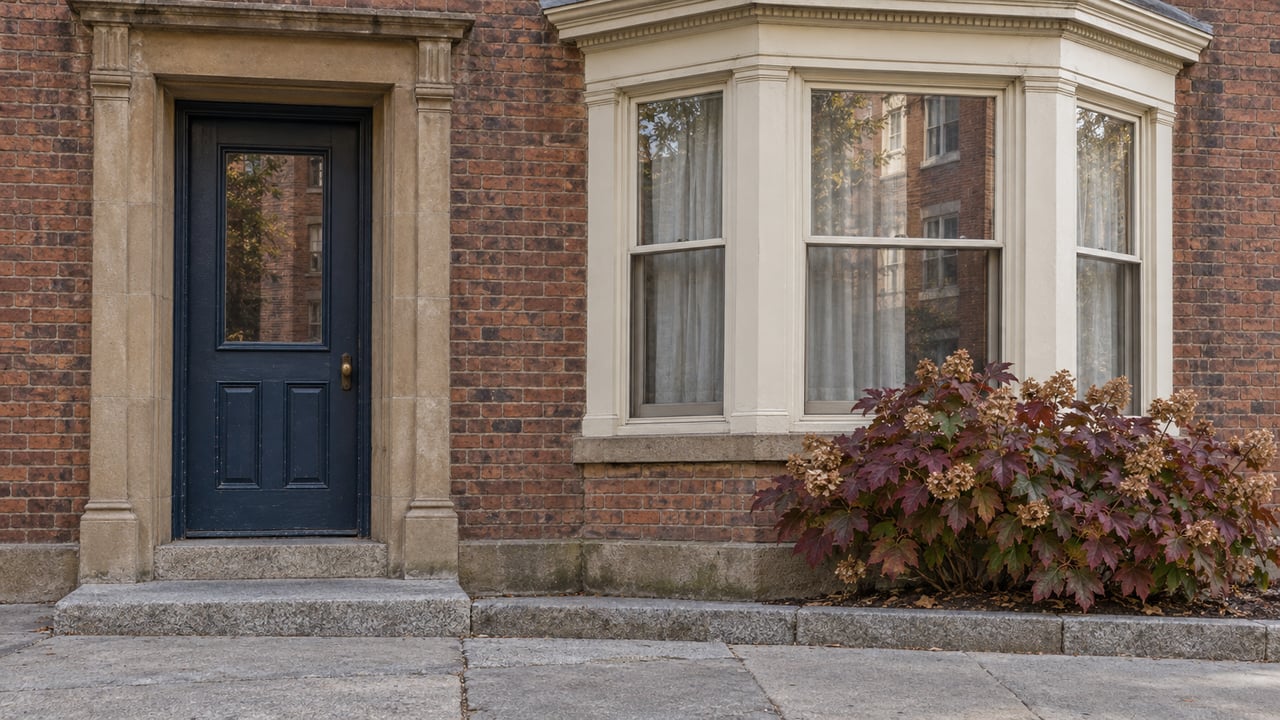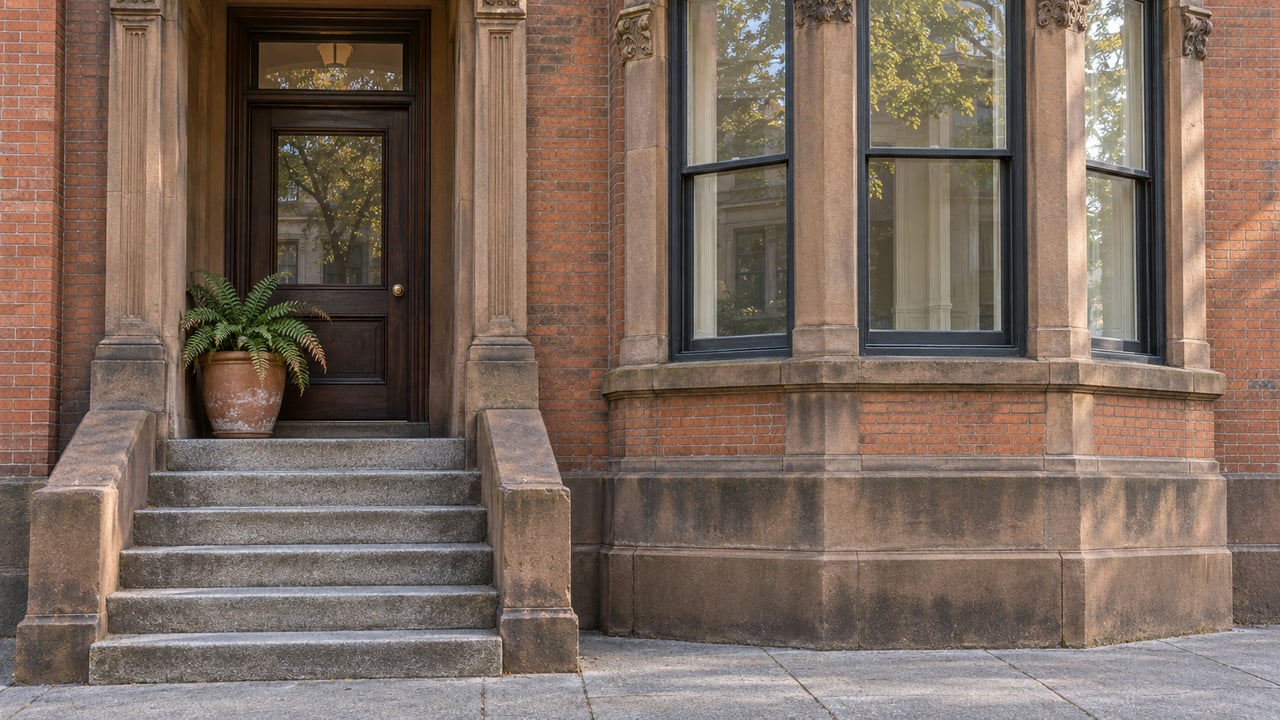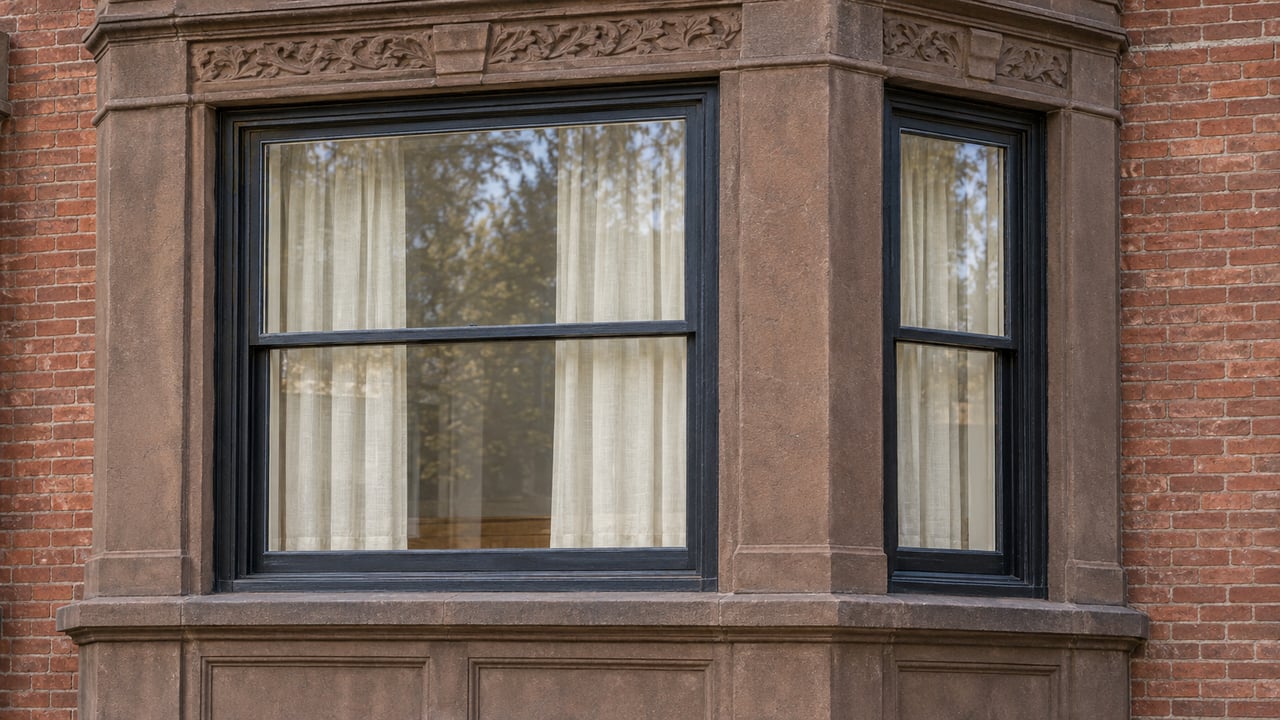
Last November, a single-family townhouse on the sunny side of Commonwealth Avenue sold for $21 million. The City of Boston assessed it at $12.5 million. A Boston Globe editorial published in February 2026 led with that gap, and it is the best way into a question every buyer at this price level should be able to answer before signing: what will this home actually cost to hold each year?
The answer is rarely the tax figure on the listing sheet. In Boston, a property tax bill is set by three things that have nothing to do with the contract price. The first is a valuation the city fixes on a date that may come before the sale. The second is a mass-appraisal model that has tracked the very top of the market loosely. The third is whether the owner lives in the home as a principal residence. Each of these can move after closing.
The assessor's valuation date comes before most buyers sign
Boston values property as of January 1 for the fiscal year that begins the following July. Fiscal year 2026 assessments reflect a valuation date of January 1, 2025. For fiscal year 2027, which runs from July 1, 2026, to June 30, 2027, the city's assessing calendar sets the assessment date at January 1, 2026, and bases values on the property's status that day.
Take the Commonwealth Avenue townhouse. It closed in November 2025, ten months after the valuation date behind its FY2026 assessment. The figure on its tax bill came from a model that had never seen that $21 million price. Anyone buying in Back Bay this fall is in the same position. The bill that arrives after closing will reflect a January 1, 2026 valuation and will know nothing about the October 2026 contract.
At the top of the market, the gap has mostly run one way
The Small Property Owners Association analyzed the 20 highest-value residential sales in Boston using Multiple Listing Service data and shared the results with the Globe editorial board. On a weighted basis, the assessments came to 68.2 percent of sale price. The association put the total underassessment across those top-20 sales at $83 million in its 2026 figures, up from $43 million in 2025 and $35 million in 2024. This is an advocacy group's analysis. The city has not adopted these findings.
The tax figures below apply the FY2026 residential rate of $12.40 per $1,000 to each number. They illustrate the gap only. They are not the actual bills on these parcels, and they leave out any exemption.
| Sale cited in the analysis | Sale price | Assessed value | Assessed as share of price | Tax on assessment at $12.40 | Tax on price at $12.40 |
|---|---|---|---|---|---|
| Commonwealth Avenue townhouse | $21,000,000 | $12,500,000 | about 60% | $155,000 | $260,400 |
| Commonwealth Avenue condo, Back Bay | $15,000,000 | $4,400,000 | about 29% | $54,560 | $186,000 |
| One Dalton unit | $12,000,000 | $13,700,000 | about 114% | $169,880 | $148,800 |
The One Dalton unit was the only one of the 20 assessed above its sale price. So the same pattern that undervalued two Commonwealth Avenue sales can also overshoot.
City officials told the Globe that the state Department of Revenue verifies Boston's data each year against the "full and fair" valuation standard. They also said assessed values may not match a later sale price. For fiscal 2026, the Assessing Department valued 30,439 single-family homes and 74,239 residential condo units. The city aims for 100 percent of market value, but in a fast-moving market, data goes out of date quickly. The editorial also pointed to signs of softness at the high end. A St. Regis penthouse in the Seaport had cut its asking price by $5 million, to $44.5 million. A model working from one January snapshot has a hard time keeping up with prices that move in both directions.
A buyer's own price becomes evidence for future valuations
The low assessment can look like a lasting discount. The state's appraisal rules point the other way. The Division of Local Services requires assessors to value all property every year at fair cash value as of January 1, using mass appraisal methods meant to value properties uniformly. Under that guidance, verified arm's-length sales of comparable properties close to the valuation date are primary indicators of value, and the market analysis uses every valid arm's-length sale in its period.
So a $15 million closing on Commonwealth Avenue enters the data set that sets values for the next January. At the trophy level, comparable sales are scarce, and each one carries more weight in that data. A gap between price and assessment today does not lock in a future bill.
The law on targeting one property because it sold is less settled. In a property-tax case decided July 31, 2026, the owners argued their assessment rose because their property sold. The Appellate Tax Board called "spot assessing" an ill-defined term without adequate legal precedent and found the claim irrelevant to whether the property was overvalued. The sources reviewed for this post do not show a categorical Massachusetts rule either way. What they do show is that sales feed the annual revaluation of the whole market.
One unit, two possible tax bills
Once the value is set, occupancy can split the bill again. Boston's residential exemption applies to one property the owner occupies as a principal residence. In FY2026 it saved a qualified homeowner $4,353.74. A second home, a pied-à-terre, or a unit held for investment pays the same residential rate without that credit. Holding a home in trust does not rule it out on its own. The city's FY2027 exemption flyer tells owners of trust-held property which trust documents to send in with the application.
| Same Back Bay condo, FY2026 | Owner-occupant, principal residence | Second home or investment unit |
|---|---|---|
| Residential rate | $12.40 per $1,000 | $12.40 per $1,000 |
| Residential exemption saving | $4,353.74 | None |
| Eligibility basis | Ownership and occupancy as principal residence | Does not qualify |
In Back Bay's tallest buildings, the second column has been common. A 2023 Globe Spotlight analysis found that only 16 percent of One Dalton owners claimed the exemption, against roughly one-third of units across 10 expensive buildings. Nearly half of market-rate units in those buildings were owned by LLCs, trusts, or other entities. Those counts are from 2023. No 2026 building-by-building update was found. For a buyer reading a tax history, the earlier owner's status changes how that history should be read. A bill that carries the exemption and one that does not are different figures on the same value. This matters for anyone weighing a Back Bay brownstone against a luxury condo or planning to use a city residence part-time.
Timing used to work against buyers here. A recent home rule petition expanded the exemption. For FY2027, homeowners who recorded a deed at the Suffolk County Registry of Deeds and began occupying the home as their principal residence between January 1 and June 30, 2026, may be eligible. Owners who owned and occupied on January 1, 2026, still qualify as before. The FY2027 application deadline is April 1, 2027.
The rate itself rose, and the next one is not set yet
The FY2026 residential rate of $12.40 is the result of a stalled fight at the State House. Boston's revised petition to shift more of the tax burden to commercial property was filed in February 2025 and was never assigned to a Senate committee, so the city set FY2026 rates under existing law. WBUR reported Mayor Michelle Wu's estimate that the average homeowner's annual bill would rise about $780 while commercial bills fell an average of 4.4 percent. On January 15, 2026, the State Senate rejected a Wu-style shift 33 to 5.
As of October 2026, the FY2027 rate is not published. Here is the order in which a fall 2026 buyer's first full-year figures arrive:
- Late December 2026. Third-quarter bills go out, carrying the FY2027 assessed value and the FY2027 tax rate.
- January 1, 2027. FY2027 abatement applications become available through Boston Property Lookup.
- February 1, 2027. Deadline to file an FY2027 abatement application. The city asks for a completed application and an Information Requisition Form, and warns that missing requested information within 30 days can lead to denial.
- April 1, 2027. Deadline to apply for the FY2027 residential exemption.
A buyer who closes this month will see FY2027's actual number only in late December. That number will rest on a January 2026 valuation and on the occupancy facts the city has on record.
Two proposals that are still only proposals
Buyers above $2 million often ask about a Boston transfer fee. On April 15, 2026, the City Council voted 11 to 2 for a home rule request for a 2 percent fee on the portion of a sale price above $2 million, with proceeds going to the Neighborhood Housing Trust. Universal Hub reported that Councilor Ruthzee Louijeune estimated it would cover about 10 percent of city transactions. Mayor Wu signed the petition on April 30. As H.5464, it was referred to the House Revenue Committee on May 28, 2026, and the official bill history shows no action since. The Senate's property tax relief bill, S.2917, passed that chamber 37 to 1 on January 15. It lets communities offer targeted credits when residential levies rise more than 10 percent. Its history shows no House action.
Questions buyers raise at this price level
Does the state's 4 percent surtax apply to a high-end sale price? No. The Massachusetts surtax applies to taxable income above $1,107,750 for tax year 2026. Gain on the sale of a personal residence counts only to the extent it is otherwise subject to Massachusetts income tax.
Is there paperwork tied to sales over $1 million? Yes. Since November 1, 2025, sales of Massachusetts real estate for $1 million or more require withholding paperwork. Withholding may apply to nonresident sellers.
Where can the current assessment on a specific unit be checked? The city's Boston Property Lookup tool, which the city says gives access to preliminary assessments and taxes. The residential exemption application is downloaded there after December's third-quarter bills go out.
Reading a Commonwealth Avenue tax history well takes a few things: the assessment date behind it, the previous owner's occupancy status, and a sense of where that value stands against recent Back Bay closings. That is the kind of detail David Mackie goes through with clients before an offer, alongside a confidential valuation for owners weighing a sale. For a quiet first look at trophy residences, receive exclusive off-market listings.
This article is general information, not legal, tax or financial advice. Consult a qualified professional about your situation.