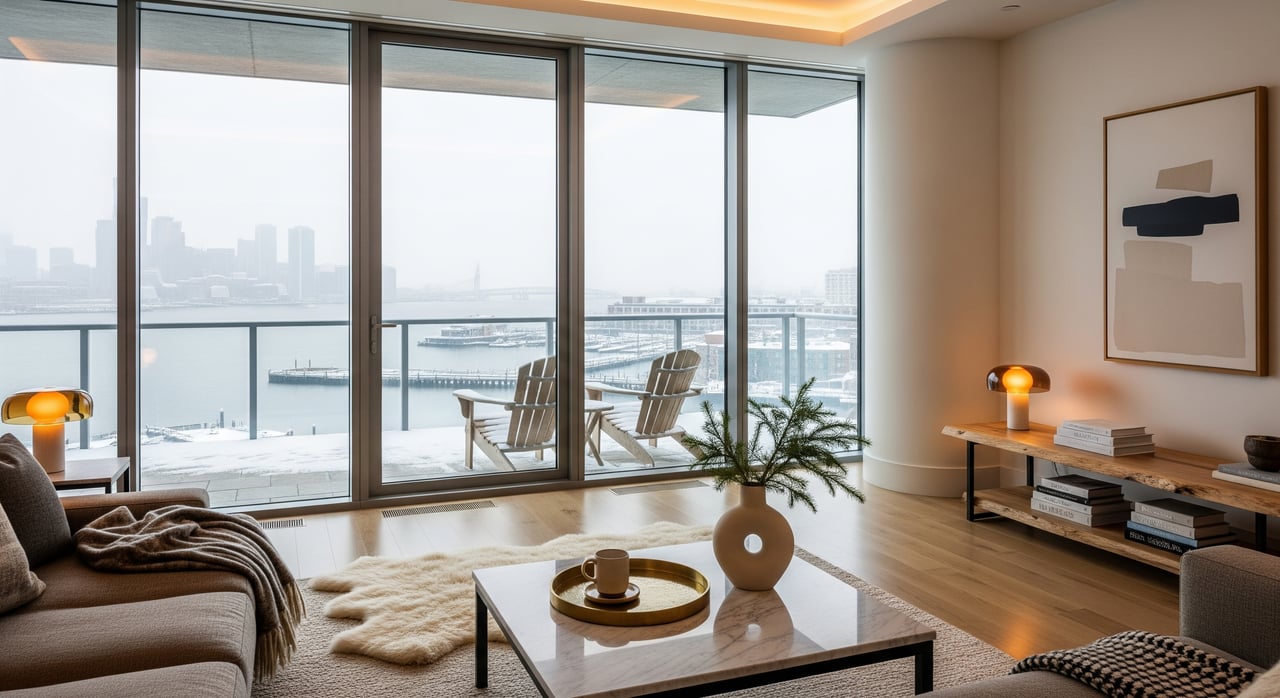
Are you getting ready to list a Boston Waterfront condo during the colder months? You might worry about shorter days, snow, and slower foot traffic. With the right winter staging plan, you can turn those challenges into an advantage by highlighting light, unobstructed harbor views, and true year‑round comfort. Below, you’ll find a focused approach tailored to Waterfront condos that helps protect your sale price and shorten days on market. Let’s dive in.
Why winter staging matters on the Boston Waterfront
Buyer activity typically slows in winter, and the Boston Waterfront is no exception. That also means you face fewer competing listings. Motivated winter buyers look closely at livability in cold weather and the reliability of building services.
Your goal is simple: make the unit feel bright, warm, and easy to enjoy in every season. If you center light, the view, and visible comfort, you can keep attention on what drives value for waterfront properties.
Stage for light: brighten every room
Layered lighting makes a dramatic difference during short winter days. Combine overhead fixtures, floor lamps, and table lamps to remove shadows. Use warm LED bulbs in the 2700K–3000K range for a cohesive, inviting tone throughout the home.
Open shades and blinds fully for every showing. If privacy is needed, use sheers that allow daylight to pass. Remove or tie back heavy drapes that block windows. Place a lamp near a mirror or glossy surface to gently amplify light where the sun fades early.
Keep glass pristine. Wipe and dry windows before photos and showings, and consider professional exterior window cleaning. If you see persistent condensation or fogged panes, address humidity or HVAC balance to avoid the look of deferred maintenance.
Make the view the focal point
Water views carry the premium. Clear windowsills, remove anything blocking slider tracks, and keep balcony doors accessible. Arrange primary seating to face the harbor or skyline so buyers immediately connect with the view.
Minimize bulky furniture in front of glass. Where possible, opt for low‑profile seating to preserve sightlines. If your balcony or rooftop allows winter use, stage it lightly with weatherproof seats and a small bistro setup. Confirm all building rules before adding heaters or accessories.
A clean balcony reads as cared‑for. Sweep away salt, sand, and windblown debris. If snow falls, clear a safe viewing area so buyers can step out and orient to the vistas.
Create visible warmth and comfort
Set the thermostat so buyers feel warm the moment they arrive. A typical comfort range for showings is about 68–72°F. Ensure radiators or baseboards are clean and not blocked by furniture.
Use layered textiles to signal comfort without clutter. A neutral rug underfoot, a soft throw on the sofa, and a few textured pillows go a long way. Favor wood tones, warm metallics, and understated seasonal accents rather than heavy holiday décor.
Keep scents light and neutral. Fresh linen or a subtle citrus works; avoid overpowering fragrances. If you have a fireplace or gas logs and building rules permit, consider a safe demonstration during a scheduled showing or include a staged photo that shows the ambiance.
Showcase building amenities buyers value in winter
Common areas influence perceived value in cold weather. Coordinate with management to ensure the lobby, hallways, and elevators are well‑lit and spotless during showings. Clear signage and warm lighting help buyers imagine daily life in the building.
Highlight year‑round services and amenities. Buyers respond to details like snow removal, concierge or doorman coverage, heated or covered parking, indoor fitness centers, and secure storage. Prepare a one‑page amenity sheet for showings so visitors can review benefits after they leave the unit.
Be ready to address building systems. Buyers will ask about heating, hot water, window maintenance, and envelope care. Clear answers reassure them about winter performance and future upkeep.
Time photos and showings for maximum effect
Plan photography around the brightest available daylight. For waterfront views and skyline sparkle, include at least one twilight image taken during blue hour, roughly 20–40 minutes after sunset. Verify the day’s sunset time using a reliable source, such as the Boston page for local sunset times, and coordinate accordingly.
Dusk showings can be powerful on the Waterfront. Start about 30–60 minutes before sunset so buyers see the space in golden hour and then the nighttime view as lights come on. Turn on all interior lighting, use cohesive warm bulbs, and switch on balcony or terrace lights to define lines and depth.
Safety and logistics for evening showings
Make access simple and safe. Ensure clear, well‑lit paths from the street to the lobby, especially after storms. Provide parking and elevator instructions in showing notes so guests arrive relaxed.
Confirm with management that evening access is approved and any lockbox or key exchange meets building policies. Keep amenity doors open or staffed during scheduled tours if rules allow so buyers can explore without delays.
Pre‑listing plan and checklists
A well‑timed plan reduces surprises and keeps your listing crisp from day one.
3–4 weeks before listing
- Deep clean the unit and schedule interior/exterior window cleaning where feasible.
- Declutter and depersonalize; keep seasonal décor minimal and neutral.
- Handle small repairs, including window seals and touch‑ups, and check balcony rail stability per building rules.
- Book a professional photographer and target a clear day; reserve a twilight slot.
- Coordinate with management about lobby readiness and amenity access during showings.
- Gather simple staging items: warm throws, textured pillows, soft rugs, and a small kitchen tray for coffee or tea staging.
1–2 weeks before listing
- Engage a professional stager for key rooms if budget allows, or opt for partial staging.
- Confirm heating and hot water performance; have maintenance records available if applicable.
- Ensure storage rooms, bike areas, and mailrooms are tidy if you plan to feature them.
Day of listing or showings
- Open all shades; turn on every light with warm bulbs.
- Set the thermostat to a comfortable level.
- Wipe glass and mirrors; sweep the balcony; turn on terrace lighting if available.
- Place a clean entry mat and shoe covers to prevent salt tracking.
- Add a simple fresh arrangement; keep scents subtle and neutral.
- Prepare an amenity sheet plus concise notes on building services and mechanicals.
Quick day‑of checklist
- Windows clean, shades open
- All lights on, warm bulbs throughout
- Thermostat set between about 68–72°F
- Entry mat in place, floors clear of snow and salt
- Balcony swept and safe to access
- Lobby and common areas checked for lighting and cleanliness
- Neutral scent; throws and pillows neatly placed
- Amenity sheet and building info ready for buyers
Budget and ROI considerations
If full staging is not practical, consider partial staging focused on the living area, primary bedroom, and kitchen. These rooms carry most of the visual weight in photos and showings. Virtual staging can help if a space is empty, but real textiles, lighting, and warmth during in‑person tours are hard to replace in winter.
Professional photography and modest staging updates often cost less than a price reduction or extended days on market. Direct your budget where winter buyers focus: bright lighting, impeccable windows, and a clean, accessible balcony and lobby.
Your next step
A thoughtful winter staging plan helps you sell the Boston Waterfront lifestyle, even on the shortest days of the year. If you want a tailored strategy, curated photography, and coordinated amenity presentation, connect with David Mackie for discreet, concierge‑level representation.
FAQs
Should I wait until spring to list a Boston Waterfront condo?
- Spring brings more buyers, but winter often has fewer competing listings. With smart staging for light, views, and warmth, you can attract motivated buyers and stay competitive.
How should I prepare a balcony for winter showings?
- Clear a safe path, sweep away salt and debris, and stage a simple seating area if rules allow. Verify any heater or accessory with building management first.
What temperature should I set for winter showings in a condo?
- Aim for an immediate sense of comfort on entry, typically around 68–72°F. Ensure radiators or baseboards are clean and unblocked.
What scents work best for winter staging in a condo?
- Choose subtle, neutral scents such as fresh linen or light citrus. Avoid strong fragrances that may distract buyers or suggest you are masking odors.
Which amenities should I emphasize for winter buyers in Boston?
- Spotlight heated or covered parking, concierge or doorman services, snow removal, indoor fitness, pool access if applicable, and secure storage. Provide a simple amenity sheet at showings.