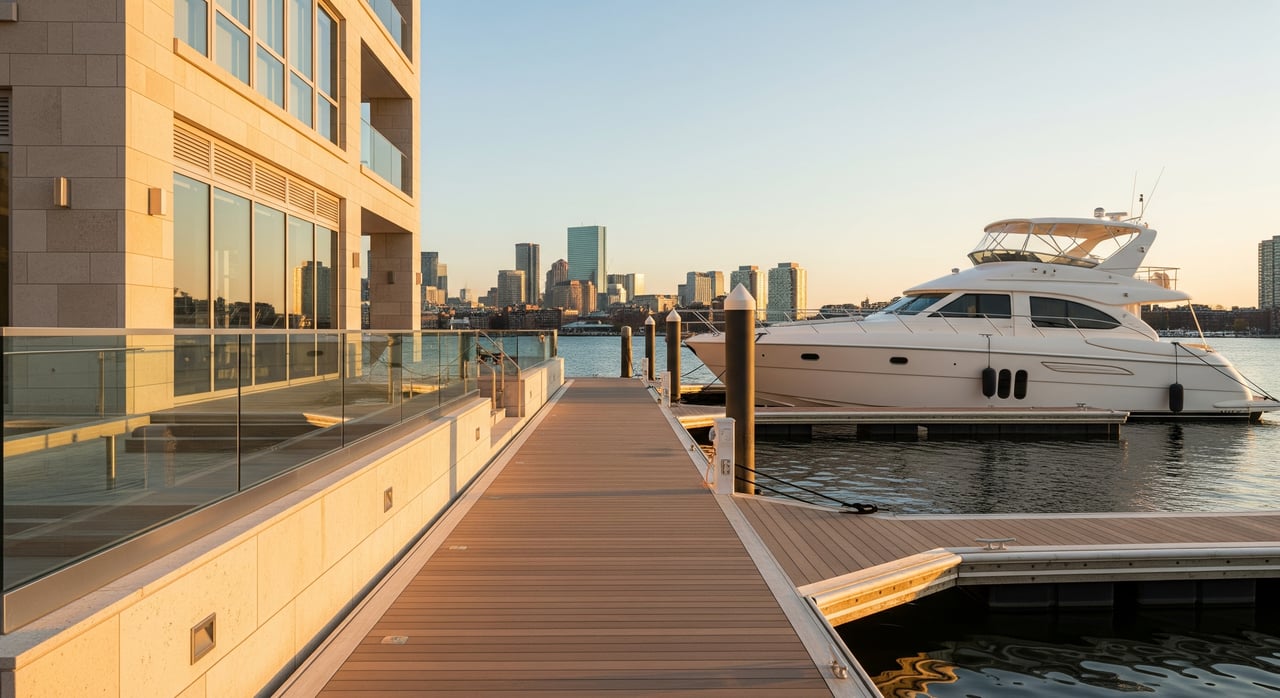
Picture this: you step out of your lobby, walk a few yards, and your boat is ready for a harbor run. If you are considering a condo on Boston’s Waterfront, that vision is possible, but the details vary by building and by marina. The harbor is dynamic, and access, rules, and costs differ across properties. In this guide, you will learn how slips and dockage work here, what to verify before you buy, and where to find authoritative answers. Let’s dive in.
Boston Harbor basics
Boston Harbor blends commercial and recreational traffic. Ferries, shipping, and cruise vessels share space with private boats, so wake, speed limits, and navigation routes matter for day-to-day usability near slips.
Tides are a core factor. The local range is significant, roughly 9 to 10 feet at the main station, which affects draft, dock height, and timing, especially at lower water. You can review tide predictions and historical data through NOAA Tides & Currents for Boston.
Demand for on-water access is high and supply is limited. Slips attached to Waterfront and Seaport residences are scarce, which drives premium pricing and stricter rules on transfer. Urban marinas often supplement building docks with seasonal or transient options, but peak-season availability can be tight.
Slip and access options
The rights you receive will shape convenience, cost, and resale. Common arrangements include:
Deeded slip
- Ownership transfers with your condo or as a separate condominium interest.
- Pros: stronger control and clearer transferability.
- Cons: higher purchase cost and potential property tax implications.
Assigned or leased slip
- Use rights are granted by the HOA or a marina operator through a license or lease.
- Pros: lower upfront cost.
- Cons: rules may limit transfer, subletting, vessel size, and access if policies change.
Seasonal slip
- Available during warmer months only, with winter haul-out elsewhere.
- Pros: fits seasonal boaters and can lower annual fees.
- Cons: requires separate winter storage logistics.
Transient dockage
- Short-term daily or weekly access for guests or overflow.
- Pros: useful for visitors.
- Cons: limited in peak season, often higher per-night fees.
Dry storage or dry stack
- Boat stored on land and launched by lift or trailer.
- Pros: reduced storm exposure and hull fouling.
- Cons: added travel time and offsite coordination.
Yacht-club membership
- Access to club docks and amenities through membership, sometimes with reciprocal privileges.
- Pros: social setting and potential docking support.
- Cons: waitlists, initiation fees, and separate rules from your HOA.
What to compare in services
Not all docks deliver the same experience. Ask about:
- Shore power specs and potable water at the slip.
- Wi‑Fi coverage at the dock.
- Fuel dock and pump-out access nearby.
- Security practices: gates, cameras, and staffing hours.
- Dock construction: floating versus fixed, finger lengths, and cleat types.
- Haul, launch, and repair capabilities or nearby boatyard partners.
Boston-specific factors
Local rules and conditions shape daily use and long-term costs:
- Regulations: The City Harbormaster sets mooring and speed rules, and state and federal authorities enforce safety and navigation. Review statewide boating guidance at Mass.gov’s boating page.
- Tides and depth: Many urban docks require periodic dredging to serve deeper-draft vessels. Confirm who pays and how often.
- Storms and insurance: Nor’easters and storm surge affect waterfront risk profiles. Ask about storm plans, tie-down protocols, and insurance requirements for slip holders. For owner checklists and practical coverage guidance, consult BoatUS resources.
- Public access obligations: Waterfront zoning may include Harborwalk requirements and public access terms that influence dock operations. You can explore neighborhood planning context through the Boston Planning & Development Agency.
- Urban services: Expect to rely on nearby marinas for fuel, pump-out, and major repairs, even if your building has resident-only docks.
For broader harbor context and public programming, see Boston Harbor Now.
Buyer verification checklist
Before you commit, verify these items with the seller, HOA, and marina operator. Ask for documents, not just verbal summaries.
Legal and title
- Is the slip deeded or licensed, and how does it transfer at closing?
- Do condo documents detail allocation rules, termination conditions, and any easements?
- If deeded, confirm tax parcel treatment.
Costs and assessments
- Current annual slip fees, HOA dues, guest fees, and any special assessments.
- Historic fee changes and upcoming capital projects such as dredging or bulkhead work.
- Insurance requirements for liability and hull coverage.
Physical specifications
- Allowed LOA, beam, draft, and any height limitations.
- Power and water specs, dock type, finger length, and gate access.
- Condition of docks, pilings, gangways, and maintenance schedules.
Operations and seasonality
- Year-round use or seasonal only, plus winter storage arrangements and timelines.
- Guest policies and proximity of transient alternatives.
- Emergency and storm procedures, notice periods, and responsibilities.
Transfer and rental
- If assigned, does slip use transfer to a buyer or require board approval or waitlists?
- Are slips rentable or sublettable, and are there occupancy requirements?
Regulatory and environmental
- Status of required permits for docks and any pending regulatory actions.
- Local mooring permits and pump-out policies.
Professional review
- Engage a marine surveyor for dock condition, a marina or real estate attorney for title and governing documents, and an insurance broker familiar with marine policies.
Seasonal planning and logistics
Boston’s boating season is vibrant yet finite. Most owners haul and winterize offsite, then launch in spring. Confirm priority scheduling for residents, haul-out capacity, and travel-lift size limits.
Plan your routine around tides and traffic. Review local tide windows through NOAA Tides & Currents and coordinate fuel and pump-out stops with nearby marina hours.
Where to get answers
Start with authoritative sources, then confirm details with your HOA and marina operator:
- Tide data and planning: NOAA Tides & Currents, Boston station
- State boating rules and registration: Mass.gov boating topics
- Neighborhood planning and waterfront policy: Boston Planning & Development Agency
- Practical owner checklists and insurance tips: BoatUS guides
- Harbor information and programs: Boston Harbor Now
Next steps
If boating access is central to your purchase, focus first on the slip structure and rules, then on the residence. The right condo is the one that matches your vessel, your seasonal plan, and your long-term risk tolerance. With scarce urban slips and evolving waterfront infrastructure, careful verification protects your lifestyle and your investment.
For a confidential, curated search that prioritizes on-water access and governance details, connect with David Mackie for trusted guidance and access to select and off-market opportunities.
FAQs
Boston Waterfront condos: Is a slip included with the unit?
- It depends on the building’s documents; confirm whether the slip is deeded to the unit or allocated by license and how it transfers at closing.
Slip sizing on Boston’s Waterfront: What boat will fit?
- Verify allowed LOA, beam, draft, and any height limits against your vessel’s specs and ask for written slip dimensions.
Year-round docking in Boston: Can I keep my boat in all winter?
- Most docks are seasonal and require offsite winter storage; confirm winter policies and launch timelines with the HOA or marina.
Dredging and maintenance: Who pays for depth and dock repairs?
- Check governing documents and recent meeting minutes for responsibility, reserve funding, and any pending special assessments.
Rules and permits: What regulations affect my use of a slip?
- Local harbormaster rules, state boating laws, and federal navigation rules apply; review state guidance at Mass.gov and ask the building or marina for specifics.
Insurance and storms: What coverage is typically required?
- Expect liability coverage at a minimum and often hull insurance; review the HOA requirements and consult owner guidance from BoatUS for best practices.